Why We Say No to Clients Who Don’t Know What They Want (And Why That’s Good for Everyone)
I turn down clients. Regularly. And I know how that sounds coming from someone who runs a development agency.
But here is the thing most agencies will never tell you: taking on the wrong project hurts everyone. It hurts us because we end up firefighting instead of building. And it hurts you because you get a product shaped by confusion instead of clarity.
Over the years, I have learned to spot the patterns early. There are three types of client relationships that almost always go sideways, and I would rather be honest about them upfront than pretend everything is fine until the invoice disputes start rolling in.
The “I’ll Know It When I See It” Client
This is the most common one. Someone reaches out and says they want a website. Or a web application. Or a platform. But when you ask what it should do, the answers are vague.
“Something like Airbnb but for our industry.” “We need a portal.” “Just make it modern.”
I get it. Not everyone comes to the table with a detailed spec. And that is completely fine. The problem is not that they lack a spec. The problem is when they do not even know what outcome they want.
Muddy thinking leads to muddy projects. When requirements are unclear, every decision becomes a guess. The design is a guess. The feature set is a guess. The timeline is a guess. And at some point, someone gets frustrated because the guess was wrong.
What we do in these cases is simple: we help them get clear first. We will sit down, ask the right questions, map out the business flow, and figure out what they actually need. But we will not start building until that clarity exists.
Some people appreciate that. Others want to jump straight into development. When someone insists on building without knowing what they are building, we step back.
It is not about complexity. A simple five-page website with clear requirements is a better project than a complex platform built on vague ideas.
The clients I love working with? They know what they want. Maybe not every technical detail, but they understand their business problem. They can tell me what success looks like. From there, we can design the flow together. Without that foundation, it is just lots of redo and undo.
The “Everything for Nothing” Client
This one is tricky because it is not always obvious at first. The conversation starts well. Big vision, exciting ideas, genuine enthusiasm. Then you talk about budget.
“We are a startup, so we need to keep costs low.” I hear you. I started a business from scratch too. I understand budget constraints. But there is a difference between working within a budget and having no budget at all.
When someone wants a custom e-commerce platform with membership features, a mobile app, third-party integrations, and a custom admin dashboard, but their budget is what a landing page costs, we have a problem.
I have seen what happens when agencies say yes to these projects anyway. They cut corners. They use the cheapest tools. They skip testing. The client gets something that sort of works, kind of looks right, but falls apart the moment real users touch it.
That is not how we operate. I would rather be honest upfront and say, “Here is what your budget can actually get you,” even if it means the project does not happen.
- A realistic budget means we can build something solid that actually serves your business
- An unrealistic budget means we would have to cut so many corners that the final product would not represent our work or your vision
- We would rather suggest a phased approach than deliver half-baked work in one go
Sometimes clients come back after rethinking their budget. Sometimes they find another agency that says yes to everything. I have seen how both scenarios play out, and I sleep better knowing we were straight with them.
The “Self-Proclaimed Developer” Client
This is the most dangerous type. And I do not say that lightly.
These are clients who have some technical knowledge, or think they do. They have watched tutorials, read documentation, maybe even built a basic site themselves. And they come to us not because they want our expertise, but because they want our hands.
The conversations go like this: “I tried that already.” “We can do it like that instead.” “Why would you use that approach? I read that this other way is better.” “Can you just do what I am telling you?”
The problem is not that they ask questions. Questions are great. The problem is that they have already decided on the answers. They are not looking for a partner. They are looking for a typist.
Here is why this is genuinely dangerous for a project. My team is not just working on their project alone. When a client sends twenty messages a day second-guessing every decision, demanding explanations for every technical choice, insisting their approach is better, the team spends more time answering questions than doing actual work.
The productivity hit is massive. One client like this can slow down an entire team because the mental overhead of constantly defending your work is exhausting.
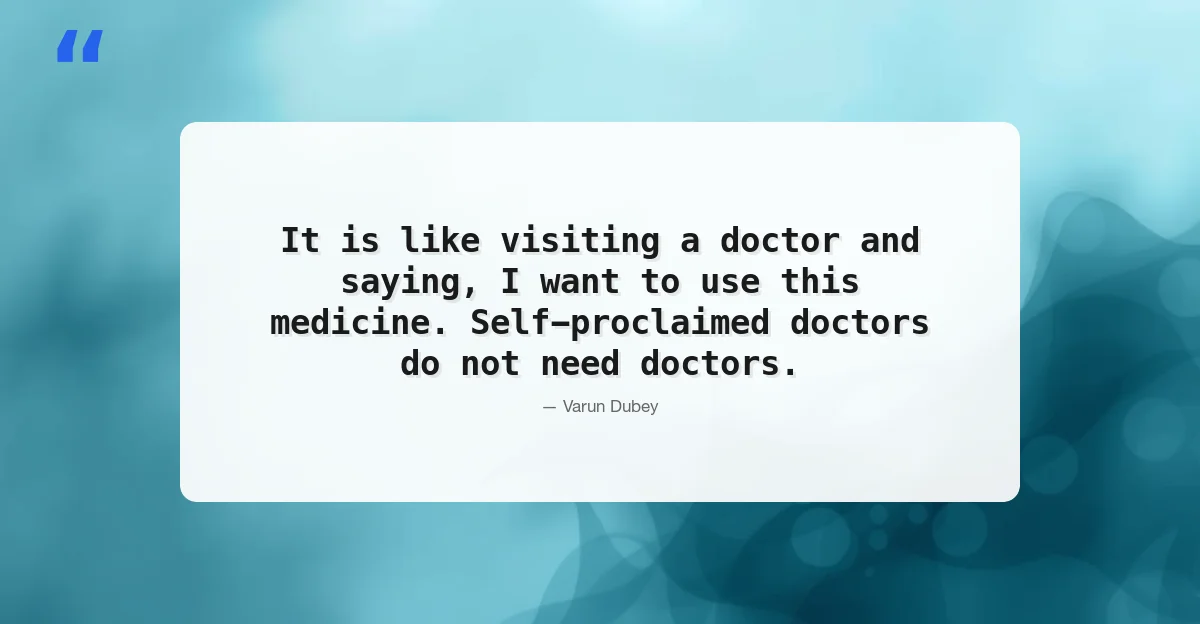
I use this analogy a lot because it resonates. You go to a doctor because they have the training and experience to diagnose your problem and prescribe the right treatment. If you walk in already decided on your medication, why are you there?
Same with development. If you have already decided on the architecture, the framework, the specific implementation, and you just need someone to type the code, you do not need a development agency. You need a freelancer on a task-based contract.
We are not a good fit for that, and I am comfortable saying so.
What Happens When We Say No
Here is the part that might surprise you. Saying no is not about being exclusive or difficult. It is about being honest about where we add value and where we do not.
When we say no to a project, we usually try to point the client in a better direction. Maybe they need a consultant to help clarify requirements before they are ready for development. Maybe they need to revisit their budget and priorities. Maybe they need a solo developer who is happy to work purely on instructions.
None of these are insults. They are honest assessments.
And here is what saying no does for the clients we do work with. It means our team is focused. It means we are working on projects where we understand the goal, have the resources to do it right, and have a client who trusts us to do our job.
- Projects run smoother because expectations are aligned from day one
- Fewer revision cycles because we actually understand the business need
- Better outcomes because the team is building, not defending
- Stronger relationships because trust was established early
The best projects I have ever worked on had one thing in common: clear requirements. The client knew what they wanted. Maybe not the technical details, but they understood their problem and what a solution should achieve. From there, we designed the flow together. That is where the magic happens.
The Clients We Love Working With
I do not want this to come across as a rant about bad clients. Most people are reasonable. Most people come with genuine needs and are great to work with.
The clients who get the most out of working with us share a few traits.
They Know Their Business Problem
They might not know the solution, but they can clearly articulate the problem. “Our current workflow takes three hours and involves four spreadsheets. We need to bring that down to minutes.” That is a clear requirement. We can work with that all day.
They Trust the Process
They ask questions, give feedback, and push back when something does not feel right. But they trust us to make technical decisions because that is what they hired us for. There is a huge difference between healthy collaboration and constant micromanagement.
They Have Realistic Expectations
They understand that good work takes time and costs money. They would rather build something right in phases than rush everything into a single chaotic sprint. They plan. They prioritize. They understand tradeoffs.
They See Us as Partners, Not Vendors
This is the biggest one. The best client relationships feel like partnerships. We are invested in their success because their success is our success. That only works when both sides respect each other’s expertise.
Why This Matters for You
If you are reading this and thinking about hiring a development agency, here is my honest advice.
Before you reach out to anyone, get clear on what you need. Not the technical details. Not the platform or framework. Just the business problem you are trying to solve and what success looks like.
Be honest about your budget. If you do not know what something should cost, ask. Any good agency will give you a ballpark and help you prioritize features within your budget. What they should not do is say yes to everything and then deliver a fraction of it.
And when you do hire someone, let them do their job. Give feedback. Ask questions. Stay involved. But trust the expertise you are paying for. You will get a dramatically better product, and the entire process will be smoother for everyone.
The Uncomfortable Truth About Saying No
Look, I will not pretend that turning down work is easy. Every project we decline is revenue we leave on the table. Every “no” is a risk that the client tells someone we were difficult to work with.
But the alternative is worse. Taking on a project you know will go sideways means months of frustration, scope creep, missed deadlines, and a client who ends up unhappy anyway. You burn your team out, you damage your reputation with mediocre work, and you lose money on the overruns.
I have been doing this long enough to know that the short-term loss of saying no is always smaller than the long-term cost of saying yes to the wrong project. I wrote more about this in what running a WordPress agency taught me about setting client boundaries and the mistakes I made building WordPress products globally.
So if we ever tell you we are not the right fit, please know it comes from a good place. It is not a rejection. It is an honest signal that we care enough about your project to not mess it up.
And if your requirements are clear, your expectations are realistic, and you are ready for a genuine partnership? We would love to hear from you. Those are the projects we live for.
A Quick Self-Check Before You Hire Any Agency
I want to leave you with something practical. Before you start reaching out to development agencies, run through these questions honestly.
| Question | Why It Matters |
|---|---|
| Can you describe your business problem in one sentence? | If you cannot, your requirements are not clear yet |
| Do you know what success looks like for this project? | Without this, no one can build the right solution |
| Is your budget based on research or a number you made up? | Realistic budgets lead to realistic outcomes |
| Are you ready to trust the team you hire? | Micromanagement kills good projects |
| Can you commit time to the project for feedback and decisions? | Your involvement matters, just not as a shadow developer |
If you answered yes to most of these, you are ready. And regardless of whether you work with us or someone else, you will have a much better experience because of that preparation.
The best projects do not start with code. They start with clarity. And if you are wondering how we handle the practical side of working with clients around the world, I shared our approach in how we deliver from India across time zones.